HCG
Human Chorionic Gonadotropin
The hormone that preserves fertility on TRT
HCG mimics luteinizing hormone, stimulating testosterone production and maintaining testicular function. Critical for men on TRT who want to preserve fertility.
Admin routes
Subcutaneous, Intramuscular
Popularity
Medium
Side effects
Monitor closely
Vendors
0 rated
Key benefits
What to expect
Testicular fullness maintained/restored on TRT
Improved mood and energy (via testosterone production)
Spermatogenesis maintained; fertility preserved
Continuous use alongside TRT for sustained benefits
Based on community reports and published research. Individual results vary significantly.
Dosing protocols
TRT support
250 IU
Three times per week
Ongoing with TRT
Fertility preservation
500 IU
Three times per week
8–12 weeks
PCT (post-cycle therapy)
1000–2000 IU
Every other day
2–3 weeks
Dosing information is sourced from published research and community protocols. This is not a recommendation. Consult a healthcare professional.
Research status|Extensive clinical data - FDA-approved for multiple indications
Overview
Human Chorionic Gonadotropin (HCG) is a glycoprotein hormone naturally produced during pregnancy. In men, it mimics luteinizing hormone (LH), directly stimulating Leydig cells in the testes to produce testosterone and maintain spermatogenesis. It is the most commonly co-prescribed peptide alongside testosterone replacement therapy (TRT) to prevent testicular atrophy and preserve fertility.
How it works
HCG binds to LH/CG receptors on Leydig cells, activating cAMP signalling and stimulating testosterone biosynthesis. In women, it triggers ovulation and supports corpus luteum function. In men on TRT (where exogenous testosterone suppresses natural LH production), HCG maintains intratesticular testosterone levels needed for spermatogenesis.
Side effects
Research history
HCG first isolated from the urine of pregnant women
FDA approves HCG for fertility treatments
Adopted in bodybuilding for post-cycle therapy (PCT)
Becomes standard co-prescription with testosterone replacement therapy
FDA restricts compounded HCG; later partially reversed
HCG and TRT
When a man takes exogenous testosterone, the hypothalamic-pituitary-gonadal (HPG) axis detects elevated testosterone and shuts down LH production. Without LH signalling, the testes stop producing testosterone and sperm - leading to testicular atrophy and infertility. HCG replaces the missing LH signal, keeping the testes active. Most TRT clinics prescribe 250–500 IU of HCG three times per week alongside testosterone to prevent these effects.
Reconstitution
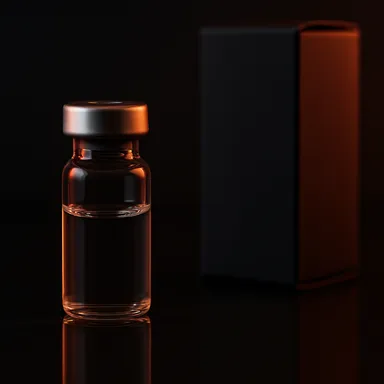
HCG typically comes in 5000 IU or 10000 IU vials. Reconstitute with the included bacteriostatic water. For a 5000 IU vial with 2 mL water: each 0.1 mL (10 units on insulin syringe) = 250 IU. Store reconstituted HCG at 2–8°C and use within 30 days.
Recommended products
Hand-picked for this compound. Ships via Amazon 🇺🇸
Core Supplies
Bacteriostatic Water 30mL
Storage & Transport
Portable Insulin Cooler Fridge
Further Reading
Peptide Protocols
References
- [1]Coviello AD, et al. 'Effects of graded doses of testosterone on erythropoiesis in healthy young and older men.' Journal of Clinical Endocrinology & Metabolism, 2008.
- [2]Lee JA, Ramasamy R. 'Indications for the use of human chorionic gonadotropic hormone for the management of infertility in hypogonadal men.' Translational Andrology and Urology, 2018.
Frequently asked questions
Related peptides
Community experiences
Share your experience with HCG. Effects, side effects, protocol details - help others make informed decisions.
No community reviews yet. Be the first to share your experience with HCG.
Need to calculate your dose?
Use our free reconstitution calculator to work out syringe units for HCG.
Open CalculatorFound this useful?
Share this guide
Get the free Beginner Peptide Protocol
Which peptides to start with, what to avoid, and safe handling. Delivered to your inbox.
Vendors
Rated suppliers
Quality, shipping, and service scores
Store
Supplies
Syringes, bac water, storage
Guides
How-to guides
Storage, reconstitution, and travel
Disclaimer: This guide is for educational and informational purposes only. It is not medical advice. The dosing protocols listed are sourced from published research and community reports and do not constitute a recommendation. Always consult a qualified healthcare professional before using any peptide. Check your local regulations regarding peptide purchase and use.